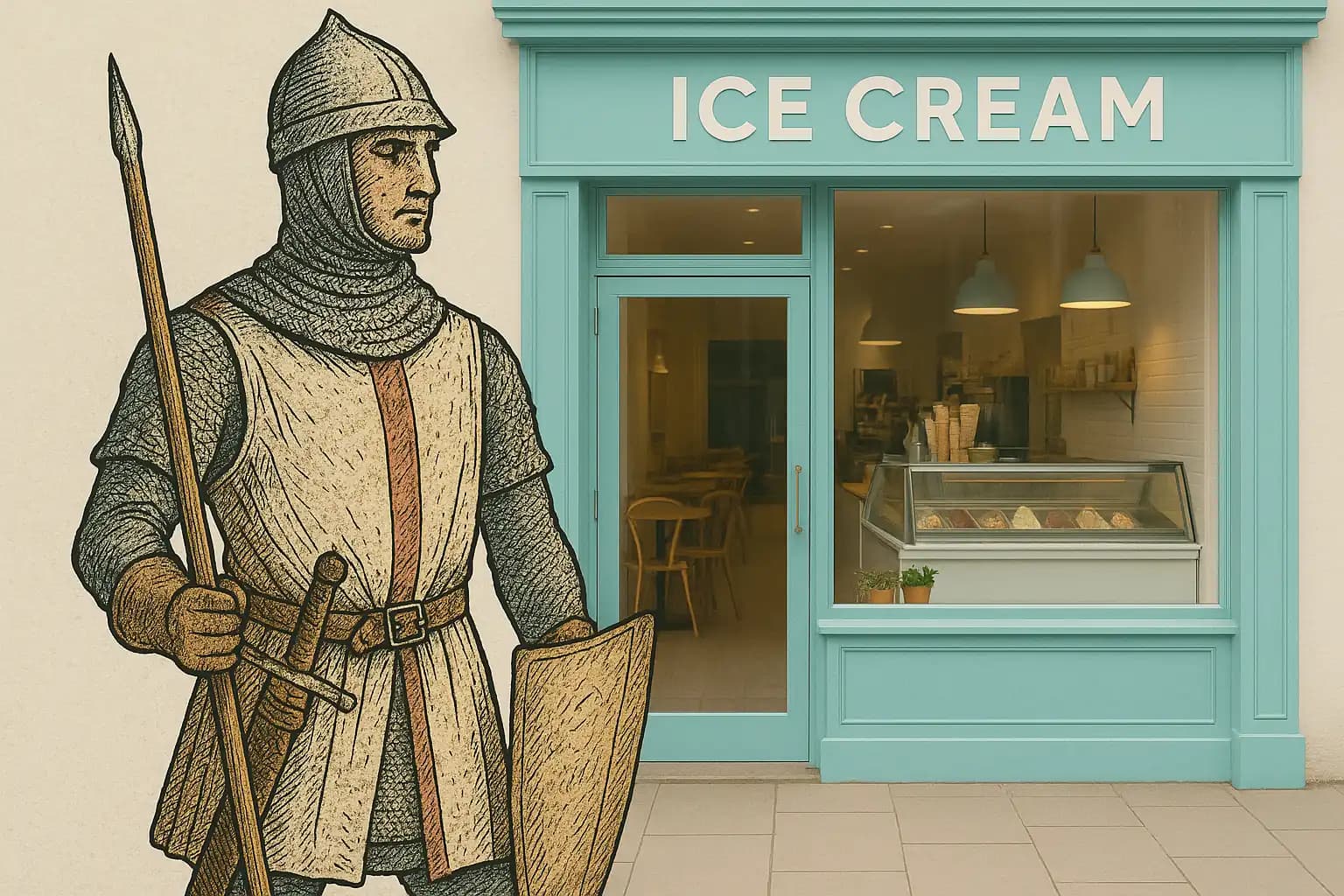



 Medieval Knight’s Tomb Discovered Beneath Polish Ice Cream Shop
 Poland
 Wed, 23 July 2025 Wednesday, 23 July 2025
 History
 3 - 4 minutes
In Gdańsk’s Old Town, workers renovating a former ice cream parlour uncovered a medieval knight’s tomb beneath the floor. The burial dates from the 13th or 14th century and includes a well-preserved limestone slab carved with a sword and a cross. Archaeologists believe the grave belonged to a person of high status, likely a knight. The style and location of the tomb suggest a connection to the powerful military orders that operated in the Baltic region during the Middle Ages.
The tomb was found in excellent condition, protected by layers of modern construction. The skeletal remains were undisturbed, and the engraved stone had not been damaged or removed. Although no weapons or personal belongings were buried with the body, the symbolic carvings serve as strong indicators of the individual’s identity and role. This practice was typical in many burials of the time, where simple but meaningful symbols replaced physical objects.
Experts think the area was once part of a burial ground near a medieval church or important building. The discovery offers a rare opportunity to learn more about life in Gdańsk during a period of political and military control. Researchers plan to examine the remains further to find out more about the person’s age, health, and background, hoping it will shed light on the region’s medieval history.

This article has
no video, yet!